As a private yoga instructor in Saint-Tropez, I work with each client individually — shaping the practice around the person rather than fitting them into a fixed method. What follows is how I understand yoga, and why I teach the way I do.
500-hour Vinyasa Krama Yoga Teacher Training certified by Yoga Alliance International.
Based in Saint-Tropez. Private sessions for local residents and international visitors across Saint-Tropez, Ramatuelle, Gassin, and Sainte-Maxime.
Félix works exclusively in one-to-one and small private group settings. Every session is arranged personally and adapted entirely to the client.
Many people begin yoga for its physical benefits — and those benefits are real. But over time, a consistent private practice reveals something deeper: the capacity to remain present, aware and grounded across all areas of life.
In each session, attention is brought to the full experience — movement, posture, breath, gaze and inner state. Not as separate elements, but as one integrated practice. The asanas become a means, not an end. What develops is a quality of presence that extends well beyond the mat.
This is the foundation of every session with Félix: not a fixed method, but an attentive, adaptive practice guided with precision and care.
Vinyasa Krama traces its roots to the teachings of Sri T. Krishnamacharya, one of the most influential figures in modern yoga. The term “Krama” refers to intelligent, gradual progression — a principle of building practice step by step, respecting the needs, capacity and evolution of each practitioner.
Unlike styles built around fixed sequences or performance, Vinyasa Krama allows the session to be shaped entirely around the individual — building strength, restoring mobility, refining breath awareness or introducing foundations to beginners. The method responds with precision to the person, not the other way around.
While yoga remains the foundation of my work, I have always believed that the body asks for more than a single form of practice. Strength, mobility and physical conditioning are not separate from mindful movement — they are extensions of the same attention to how we inhabit the body.
This is where hybrid training enters my practice. For clients who want to build physical capacity, improve posture or simply move with greater ease, I guide sessions that develop strength and mobility through controlled, deliberate movement — applying the same precision and presence that define a yoga session.
As a private yoga instructor in Saint-Tropez working across both yoga and physical training, my aim is the same in every session: to meet each person where they are, and to guide them toward clarity, capability and balance — in the body and the mind alike.
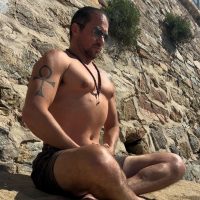
Private sessions are available mornings and evenings across Saint-Tropez. First sessions can be arranged by WhatsApp — simply share what you are looking for, and Félix will recommend the most suitable approach.
Subscribe to receive a monthly reflection on presence and meditation, along with news about workshops and future offerings.
You have successfully joined YogaFit Saint-Tropez monthly letters.